
Rhythm Pad
TCL EXAMINATION CENTER 73775
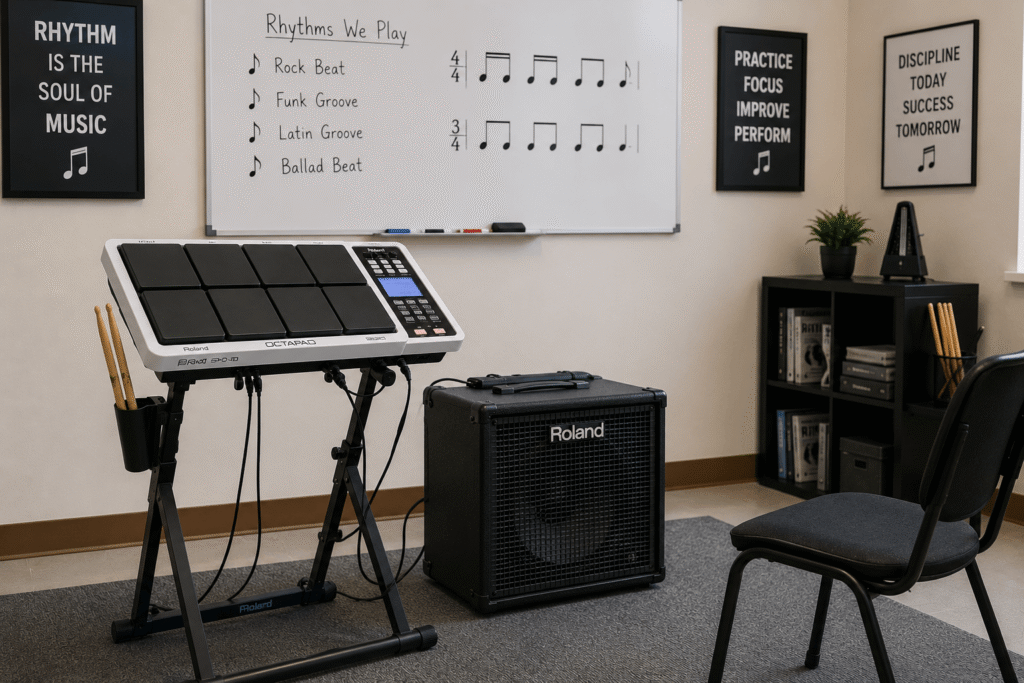
We teach drum kit skills on electronic pads - Alesis Nitro, Roland V-Drums, Yamaha DTX and Multi-12, Roland SPD-30 and similar - through the Trinity College London Drum Kit & Percussion syllabus, which is built to accept electronic kits through Grade 5.
it all starts with a demo class
Structured Rhythm Pad training, graded from Initial through Diploma level.




Rhythm Pad Classes · Ages 8 to Adult

Same rhythm training, at apartment volume.
We teach drum kit skills on electronic pads - Alesis Nitro, Roland V-Drums, Yamaha DTX and Multi-12, Roland SPD-30 and similar - through the Trinity College London Drum Kit & Percussion syllabus, which is built to accept electronic kits through Grade 5.
Why Structured Rhythm Pad Training
Electronic doesn't mean lesser - it means quieter.
An electronic pad kit isn't a compromise instrument. Played through the same Trinity syllabus, with headphones on, it teaches exactly the same rudiments,
grooves, and timing discipline as an acoustic kit - without the noise complaints from neighbours or family.

The Trinity College London Syllabus
Nine grades. Electronic to start, acoustic to finish.
Trinity's Drum Kit & Percussion syllabus explicitly allows an electronic kit for both face-to-face and digital exams up to Grade 5. From Grade 6 onward, the exam itself must be taken on an acoustic kit - so our pad-based classes are built to carry a student cleanly through that transition when the time comes.
Inside Every Exam
What a Trinity drum kit grade actually tests.
Each grade exam is built from a small set of components. We rehearse every one of them in class, months ahead of the exam date - not just the pieces.
Format & Weekly Rhythm
What actually happens in a class
Every session follows the same disciplined shape, whether a student is seven years old on a Yamaha DTX Multi-12,
or an adult with a Roland V-Drums kit set up in a spare room.
What You'll Need At Home
You don't need to buy the top of the range on day one.
♪ Getting started (Debut–3): a mesh-head entry kit like the Alesis Nitro Mesh or Roland TD-1DMK, or an all-in-one pad like the Yamaha DTX Multi-12
♪ Progressing (Grades 4–5): a more dynamic-sensitive module such as the Roland TD-07 / TD-17 or Yamaha DTX6 Series, for better cymbal choke and velocity response
♪ Worth having alongside either: a compact multi-pad like the Roland SPD-30 for looping, cueing, and session-skills practice
♪ Headphones are strongly recommended for shared housing or late-evening practice
♪ 20–45 minutes of daily practice depending on grade, logged and reviewed each class
Why TRINITY ?
Trinity College London (TCL) is widely recognized as one of the premier international examination boards for Rhythm Pad,
offering a structured yet adaptable approach to music education.
Before comparing syllabuses, it helps to know who is behind the certificate on the wall.

Board Comparison
Why we teach TRINITY
Several boards offer a drum kit grade - we chose Trinity College London deliberately,
because it is one of the few that formally accommodates electronic kits as a genuine path to a real exam, not just a practice tool.
At a glance
Electronic pad kit, next to acoustic.
Most families start here before deciding on a full acoustic setup. Here's the honest difference, to help you plan ahead.
| Electronic Pad Kit | Acoustic Kit | |
|---|---|---|
| Noise level | Near-silent with headphones — apartment and shared-housing friendly | Loud; needs a dedicated room or sound treatment |
| Starting cost | Lower — a decent entry kit or multi-pad costs a fraction of an acoustic kit | Higher — cymbals, hardware and a kit add up quickly |
| Feel & response | Consistent and quiet, though rebound differs slightly from real skins and cymbals | Natural rebound and dynamics that Grade 6+ exams require |
| Good first choice for | Beginners, shared homes, and anyone starting on Debut–Grade 5 | Students already past Grade 5, or with a space that can take the volume |
Our Faculty
Taught by examiners' standards, not guesswork...
Every instructor at MSMA is trained specifically on the current Trinity drum kit syllabus and its marking criteria, and is equally comfortable teaching on electronic pads and acoustic kits.
♪ Instructors experienced with major pad and module brands - Alesis, Roland, Yamaha
♪ Ongoing training on each new Trinity syllabus release
♪ Mock exams conducted in-house before every real exam sitting
♪ A dedicated exam coordinator who handles entries, dates and paperwork
Book your Rhythm Pad demo class
Tell us a little about the student, and we'll get back within one working day with class timings and the right grade to start from.
WhatsApp us